How Repurposing Trash Leads to Brilliant Ideas
There’s something magical about turning what others see as waste into something beautiful, useful, or even iconic. When trash becomes treasure, innovation emerges. In a world overloaded with waste, upcycled inventions and eco‑innovation aren’t just clever; they’re essential.
At the heart of this movement is one powerful idea: repurpose. When we repurpose, we don’t just recycle or redesign. We see potential in what already exists, and we use it differently.
Here’s why repurposing is becoming a key driver of innovation, and a few powerful real-life examples proving that great ideas don’t always start with something shiny and new.
Why Repurposing Fuels Innovation
- Repurposing isn’t just a sustainability trend. It’s a mindset shift. Here’s why it’s at the center of some of today’s most creative product ideas:
- It challenges assumptions. Repurposing forces us to see familiar materials in a new light.
- It reduces waste creatively. Instead of sending materials to landfills, we reimagine them for longer life.
- It unlocks low-cost prototyping. Many creators start with discarded parts to build their first models.
- It connects design to story. Repurposed materials carry meaning—people love products with a past.
Upcycled Brand Example: Alchemy Goods — From Bike Tubes to Bags
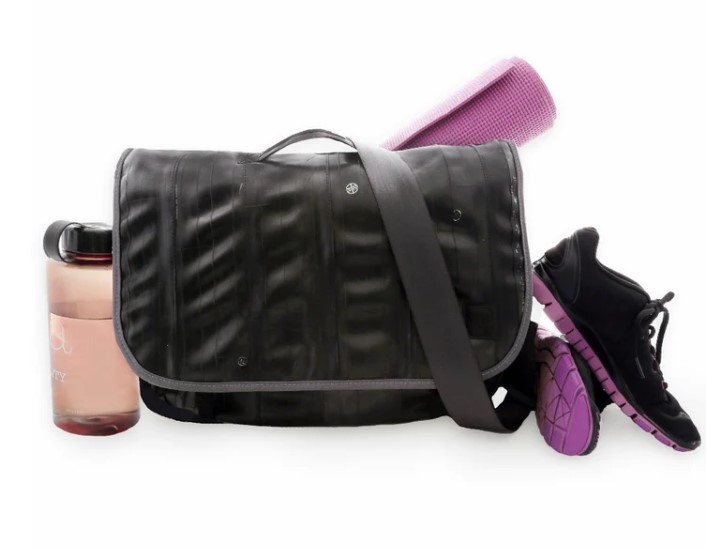
You’ve probably tossed a punctured bike inner tube into the trash. Alchemy Goods saw a second life in that scrap.
- What they do: They take used bicycle inner tubes, along with discarded denim and advertising banners, and transform them into backpacks, wallets, messenger bags, and accessories. Wikipedia
- Why it’s brilliant: The raw material (inner tubes) has high durability and flexibility, making it well-suited for bags. Plus, the story is compelling: turning “trash from the road” into something you carry as part of your daily life.
Because the design is smart and the materials are rugged, their products are functional and symbolic. Every stitch echoes the journey from waste to wearable goods.
Design as Protest: Studio Swine’s Sea Chair
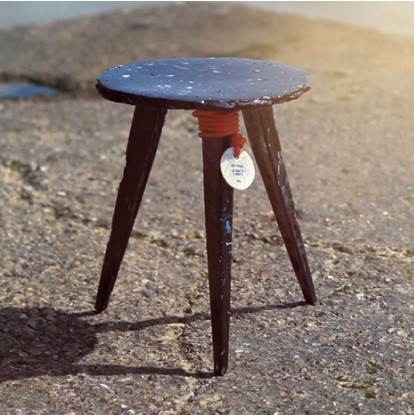
Art and social commentary often merge, especially when designers work with waste as their medium. One powerful example:
- Sea Chair by Studio Swine: They collect waste plastic from fishing trawlers on the open sea, then transform it onboard into chairs in real time. The waste collected becomes the material for the product. Wikipedia
- What’s remarkable: The “before” is the ocean of plastic pollution. The “after” is a functional chair made at sea. It’s both an object and a statement.
This kind of project reframes the relationship between environment and design—trash isn’t the problem, it’s the raw material.
Tiny Material, Big Impact: MarinaTex — Bioplastic from Fish Waste
Here’s an innovation born from the intersection of nature, waste, and design:
- MarinaTex is a bioplastic made from algae and fish-processing waste (scales, skins, and shells). Wikipedia
- Why it matters: It’s compostable in weeks, unlike traditional plastics, which may linger for centuries. It also gives value back to the fishing industry byproducts that would otherwise be discarded.
MarinaTex shows that “waste” doesn’t have to stay waste. It can become a next-gen sustainable material.
How to Think Like a Recycled Genius (for Your Own Projects)
- Inventory local waste streams
Walk through your city, your factory, your home. What gets thrown away? Plastic bottles, textiles, scrap metal, packaging? - Match materials to functions
Don’t force a material into something it can’t be. Inner tubes are flexible and waterproof, great for bags. Fishing waste might make compostable plastics. Match the property to the use. - Prototype with friction and failure
Your first versions may fall apart. That’s okay. Let them tear, crack, peel. Each failure reveals constraints and opportunities. - Tell the story
When someone knows your product started as “trash,” it changes how they see value. Use before/after visuals, raw material stories, and process videos to deepen connection. - Think circular — not just product
Invent not only the product, but the system: how will materials be collected? Disassembled? Recycled again? Real upcycling designs anticipate second, third, fourth lives.
Final Thought
Something old isn’t just something to hide. It’s a playground of possibility. Upcycled inventions like Alchemy Goods’ bags, Studio Swine’s sea chairs, or MarinaTex’s bioplastic show us what creative thinking can do when you challenge waste as waste.
So next time you see a discarded item—a broken bike tube, fishing nets, food shells—ask: What could this become? Because that willingness to see potential is exactly where the genius of repurpose innovation lives.